Human life is not desiged to be sustained above 5,500m. Kilimanjaro’s Uhuru Peak sits at 5,895m, where the oxygen is 40% lower than at sea level. People describe it as “working with only one lung.” But what if you’re a 4ft 9 midget with asthma? That’s a double deficit. Asthma basically constricts the “pipes” carrying what little oxygen is left.
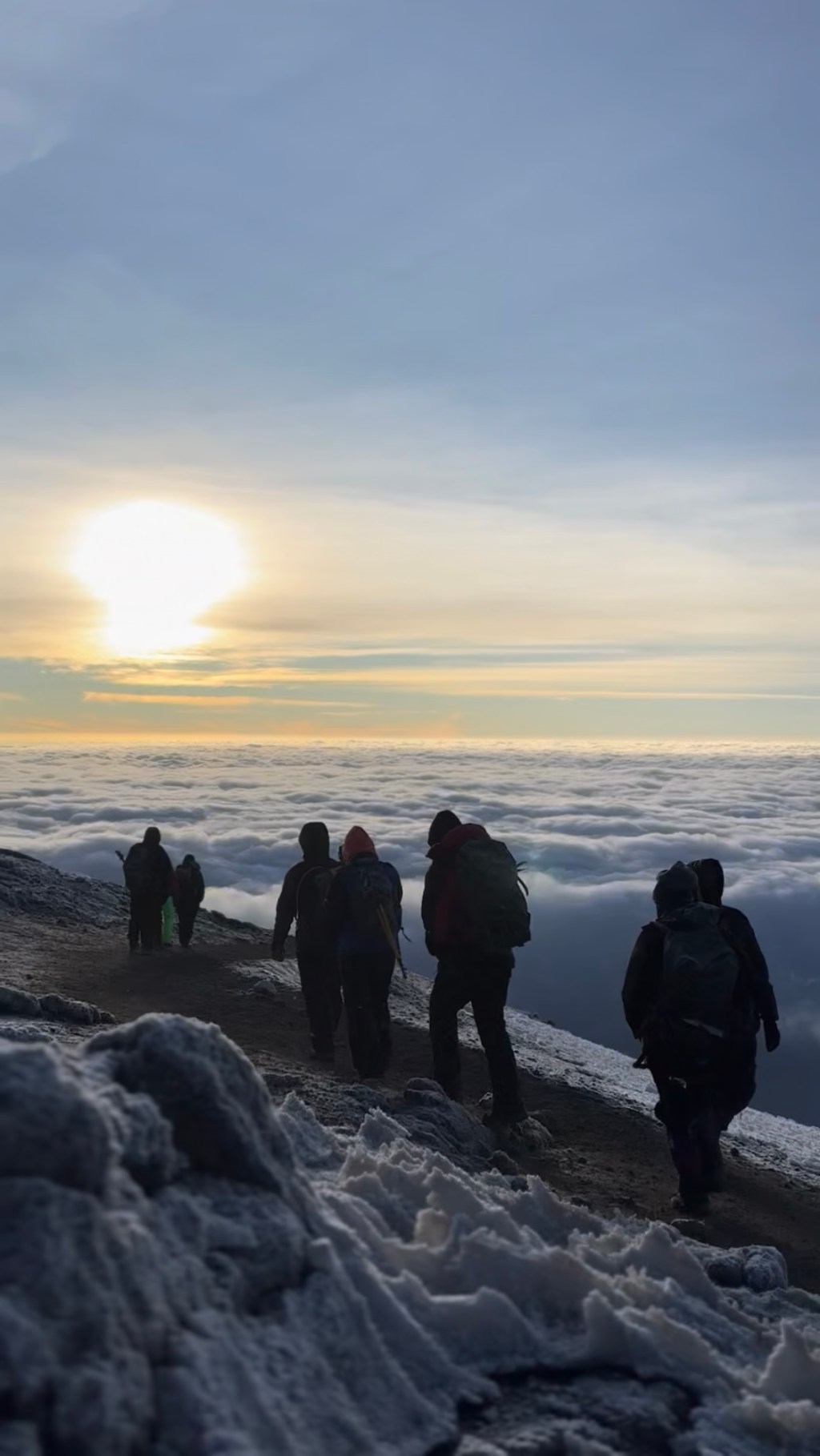
On that final midnight summit push, I felt like I was breathing through a fraction of one lung—four breaths per second for ten straight hours. My ribs felt fucking shattered. No wonder it hurt that bad when I finally cried at the summit.
I have three triggers for an attack: Cold, dry air; Fear; and Lack of Oxygen. On the way to Uhuru, I had my first full-blown attack since I was seven years old—the kind where my mother used to rush me to the hospital in an ambulance while praying to every temple for my healing.
An asthma attack feels like an elephant is sitting on your chest. I’d felt an elephant sat on my chest while acclimatising in Cusco, Peru (~3,400m) before the Inca Trail, but Kili was the matriarch. For a split second, my chest tightened so hard I could not breathe. My neck felt frozen, zero oxygen was entering, and the panic collided with the sheer torture of climbing uphill in the freezing fucking dark. Yeah, I ain’t ever doing that again.
How the FOK did I survive and summit? Biological re-engineering.
Acclimatisation is a high-speed hack of the blood and lungs. On day three of the Lemosho route, we hit Lava Tower (4,600m) before descending to Barranco Camp (3,950m) to sleep. That was a “hypoxic wake-up call.” I felt like I was legit dying. I had vivid, feverish dreams about family and friends I had no signal to reach. I was in so much agony and cold that I wore every single piece of clothing I’d brought, inside that sleeping bag.
That “dying” feeling was Acute Mountain Sickness (AMS). When AMS hits, your kidneys flood the system with EPO hormones, triggering your bone marrow to pump out new red blood cells. It’s a hard reset. While I was “sleeping” at the base of the Barranco Wall, my body was becoming more oxygen-dense by the minute.
Counter-intuitively, high altitude can actually help asthmatics—it did for me. Because I’d already built a “big engine” via VO2 Max training, my system was primed to hunt for every molecule of air.
My respiratory strength was a beast thanks to years of dancing and boxing; my diaphragm was trained to handle “air hunger” and knew how to fight for breath instinctively.
The Serendipity of the Fall When I later fell into my “Event Horizon” hole, my circulatory system was already supercharged for survival in oxygen-depleted environments. Even with two fractured ribs making every breath a jagged agony, and five days of constant internal bleeding from a rupturing kidney, my brain and heart were already “mountain-trained” to function on less volume.
I survived the hole because I’d already survived the mountain.
 SHE WON'T SIT STILL OR SHUT UP
Leave a comment